The Art of Choosing the Right Aircraft
Aircraft ownership isn’t about scale. It’s about fit – the alignment between mission, capability, and the way time is valued. For experienced owners, buying an aircraft isn’t a gesture of status; it’s a decision grounded in discipline. The best ownership choices resemble sound investments: deliberate, data-driven, and built on long-term clarity.
A well-chosen aircraft becomes infrastructure for a life or business that values time above all else. It’s not a luxury for its own sake, but a tool that delivers reach, efficiency, and control.
Precision Over Impression
The owners who get the most out of aviation rarely start by asking what’s newest or fastest. They begin by defining what’s necessary. They ask: What problem am I solving? How often will I use the aircraft, and for what kind of travel? Does its performance match the way I operate my business and my life?
Those questions set the foundation for every other decision – model selection, financing, crew, and long-term maintenance. In aviation, precision is the product of self-awareness. The aircraft that fits perfectly is the one that does exactly what’s required, without compromise and without excess.
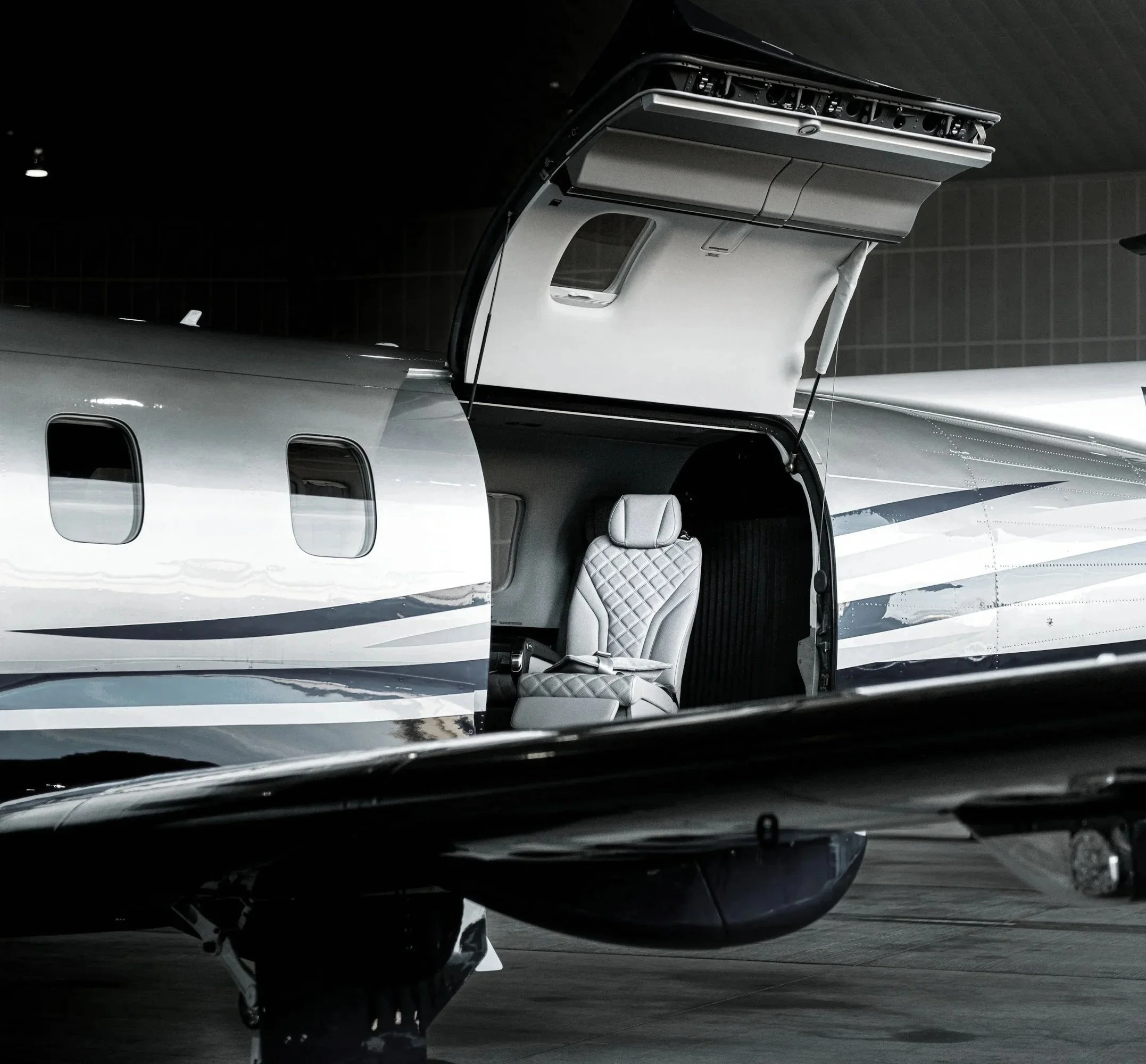
Pilatus PC-12 with cargo door open – practical, capable, and built for real use.
Understanding the Trade-Offs
Every aircraft lives on a curve that balances capability, complexity, and cost. Moving along that curve – from a turboprop to a long-range jet – isn’t a reflection of ambition; it’s an expression of purpose.
For a company with global reach, a Bombardier Global or Challenger may be essential. For regional executives or entrepreneurs, a Pilatus PC-12 or Embraer Phenom might offer far greater efficiency. Each delivers extraordinary performance within its mission profile. The key is proportionality: matching the aircraft to real operational needs, not hypothetical ones.
When that balance is right, ownership feels effortless. The aircraft performs better, retains value longer, and supports its owner’s goals instead of demanding constant attention.
Time as the Real Return
Every decision about aircraft ownership ultimately comes back to time – how it’s managed, saved, and deployed. Aviation is often described in terms of range and speed, but its true return is measured in control. It’s the ability to set your own schedule, move directly between markets, or turn a travel day into an afternoon with family.
The most accomplished owners understand that dynamic intuitively. They view their aircraft not as a trophy, but as an operating asset – a vehicle for continuity, opportunity, and access. The return isn’t abstract; it’s built into the rhythm of their lives.
The Discipline of Fit
Choosing the right aircraft demands the same discipline as any major investment. It’s not about restraint – it’s about clarity. The right airplane runs efficiently, holds its value, and evolves with its owner’s changing priorities.
That discipline often looks understated from the outside, but it’s one of the clearest signs of experience. Owners who make smart, proportionate choices aren’t being modest; they’re being strategic. They understand that precision is the real marker of sophistication.
The Mark of Experience
Sophisticated ownership isn’t measured by the size of the cabin or the top cruise speed. It’s reflected in the quality of the reasoning behind the decision.
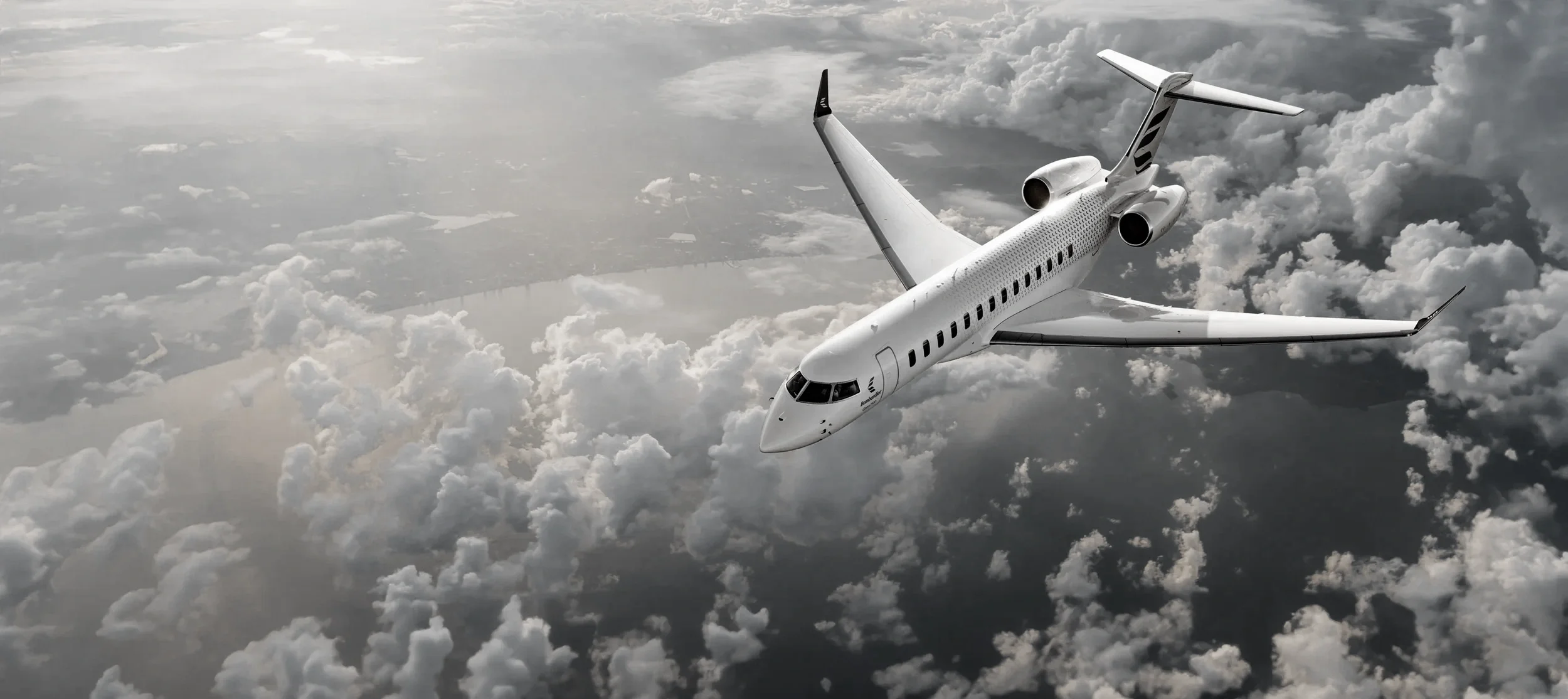
A Bombardier Global 7500 soars above a sea of clouds, sunlight tracing the curve of its wings. The image reflects quiet capability – long-range performance, precision design, and the composed confidence that defines true global reach.
Whether it’s a PC-12 connecting regional markets or a Global 7500 linking continents, the principle is identical: the aircraft should serve the mission, not define it. When it does, the ownership experience feels seamless – the airplane becomes an extension of its owner’s judgment, not a statement of wealth.
The Art of Ownership
The art of ownership lies in clarity – knowing what truly serves your life, your business, and your time. When those align, the decision doesn’t look modest or ambitious. It looks precise. And in aviation, precision is the highest form of mastery.