Designing the North
Over the past year, I’ve spent more time studying Canada’s North – reading, asking questions, and speaking with people involved in Arctic aviation, infrastructure, policy, and community development. The more I learn, the clearer it becomes that the Arctic will shape Canada’s future far more than we acknowledge.
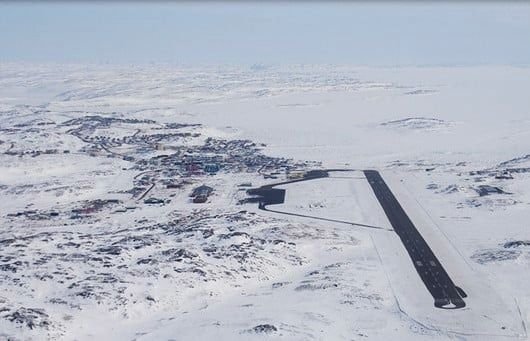
As Canada refines its Arctic strategy, it helps to focus on the fundamentals. Some realities are grounded in data, others come up repeatedly in conversations with the people building, flying, governing, and investing in the region.
Factually, the Arctic covers roughly 40 per cent of Canada’s landmass yet is home to only 150,000+ people. That ratio shapes everything from capability to cost to long-horizon resilience.
Single-industry concentration amplifies volatility
Many northern communities have grown around one dominant sector – mining in Rankin Inlet and Yellowknife, gas near Inuvik, or single-resource fisheries along the coast. The pattern is consistent: when one commodity drives an economy, the entire community absorbs the market cycle. Resilience comes from diversification across critical minerals, energy, aerospace, defence, space, research, and Indigenous-owned enterprises.Distance dictates cost – and aviation is one of the only reliable, year-round connector
Infrastructure on permafrost can cost 2-3x more than southern projects. Roads are limited, marine access is seasonal, and weather compresses operating windows. Aviation remains the backbone of sovereignty, healthcare, medevac, supply chains, and mobility. Without dependable air transport, integration with the rest of Canada is incomplete.Demographics determine durability
Many northern regions have younger populations, but long-term retention is uneven. Housing, healthcare, education, medevac access, and meaningful career pathways shape whether people stay – and stable communities are what make long-cycle investments viable.Indigenous leadership is essential to lasting development
In many northern regions, Indigenous peoples are the majority, and the most durable outcomes are the ones built with their leadership at the centre. When development reflects community priorities, land-based knowledge, and long-term stewardship, it earns trust and stands up over time.
Taken together, the Arctic isn’t a distant chapter of Canada – it’s a strategic asset. It’s where aviation capability, remote-environment infrastructure, dual-use aerospace technology, and sovereignty converge.
For those working in aerospace, defence, investment, and national strategy, the takeaway is clear: when we design the North with diversified industries, reliable aviation access, demographic stability, and community-driven governance, we strengthen not just the region but the country.
This is long-horizon work – the kind that shapes national resilience and who we become.